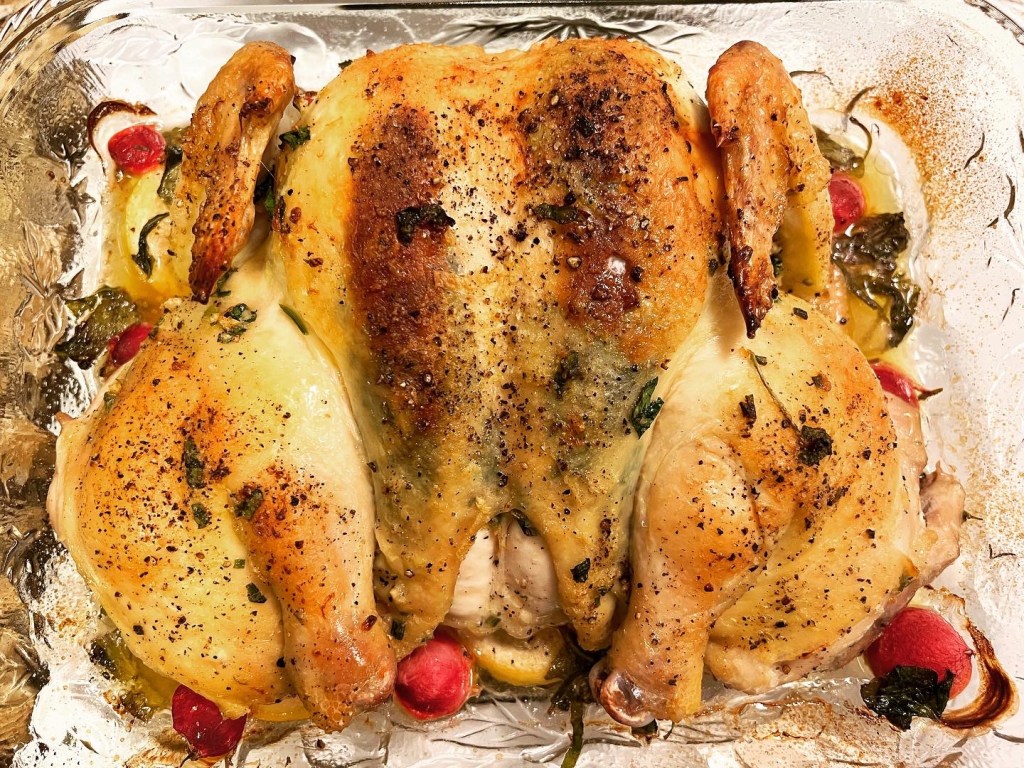
Summertime! And the livin’s easy! And so is this bomb summery lemon-chicken dish. We love to grill more often than not when the digits climb into the 90s here in North Texas. However, you can’t always grill every single meal in the summer. When the dinner’s gotta be cooking, but the dishes and laundry are also piling up, sometimes you have to turn on the oven and let it do its thing while you tackle other necessary, everyday tasks.
My commute each day is a minimum of 35 minutes. Each way. This may not seem like much to some; but to me it’s enough that I need some distractions to make the commute mentally shorter. Some of the ways I do this is by listening to a sermon in the morning on my drive and either listening to my French Living Language CDs (yes, I still have a CD player in my car. I’m told they don’t make them with CD players anymore…?) or an audiobook on Libby a really cool app my friend Faith told me about. On Libby, you can access all of your local library’s digital content on your portable devices – for FREE!
Sometimes, I pick an audiobook based on whether it has a great book club kit online. Not every time, but enough times that I can’t deny the habit at this point. While I can’t recommend the book that inspired this post (it was actually kind of messy and depressing chick fiction), I can certainly tell you about my spin on the world-rocking, roasted chicken recipe from the book club kit (adapted from a recipe on the Nosh with Tash blog).
Years ago, we lived in an area with a fresh produce co-op easily accessible. One week, we got a good bunch of radishes and not wanting to waste anything, I did some research and I found a recipe in my copy of the Joy of Cooking for sauteed radish greens. When you sautee the radish greens, the natural sweetness comes out and you get an incredibly well-balanced and flavorful side dish. Also, when you roast radishes, the aggressive pepperiness of the radish is mellowed and the natural sugars are revealed. Roasted radishes are the surprising accompaniment to lemon chicken you didn’t know you needed. When you try it, you won’t want to eat any other way.
Ingredients:
1 whole, roasting chicken
1 bunch radishes, thoroughly washed, tops separated & chopped
4 tbsp room temperature salted butter
1 tbsp chives, chopped
1/2 tbsp dried tarragon
2 cloves garlic, minced
2 tsp kosher salt
1 tsp black pepper
2 lemons, 1 sliced into ¼-inch rounds & 1 zested
Directions:
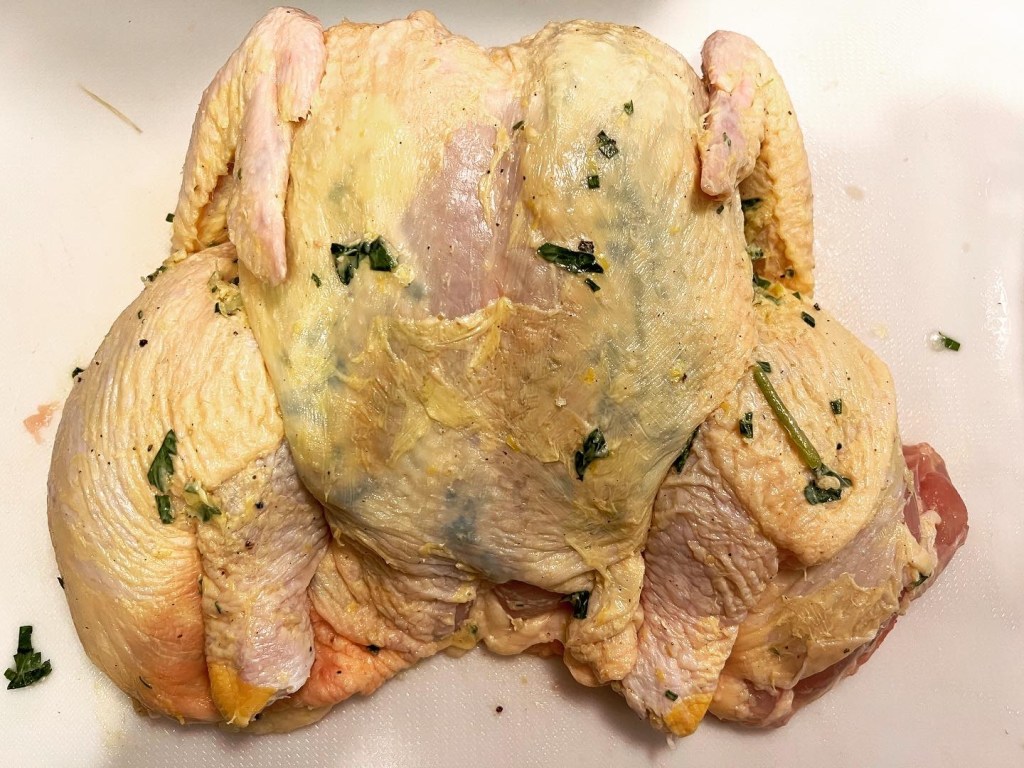
1) With your kitchen shears, carefully cut the backbone out of your roasting chicken. If you’re not sure how to do this, Food Network has a great tutorial here.
2) Preheat your oven to 425°F.
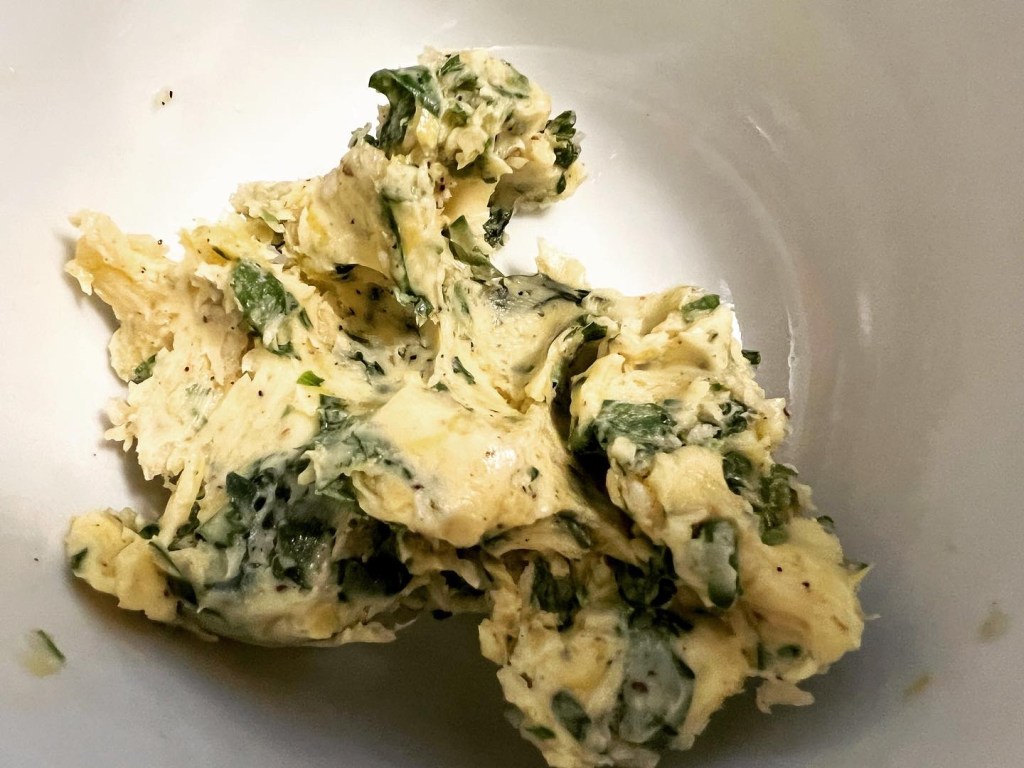
3) In a small bowl, mash the softened butter, chives, radish tops, garlic, lemon zest, salt,
and pepper.
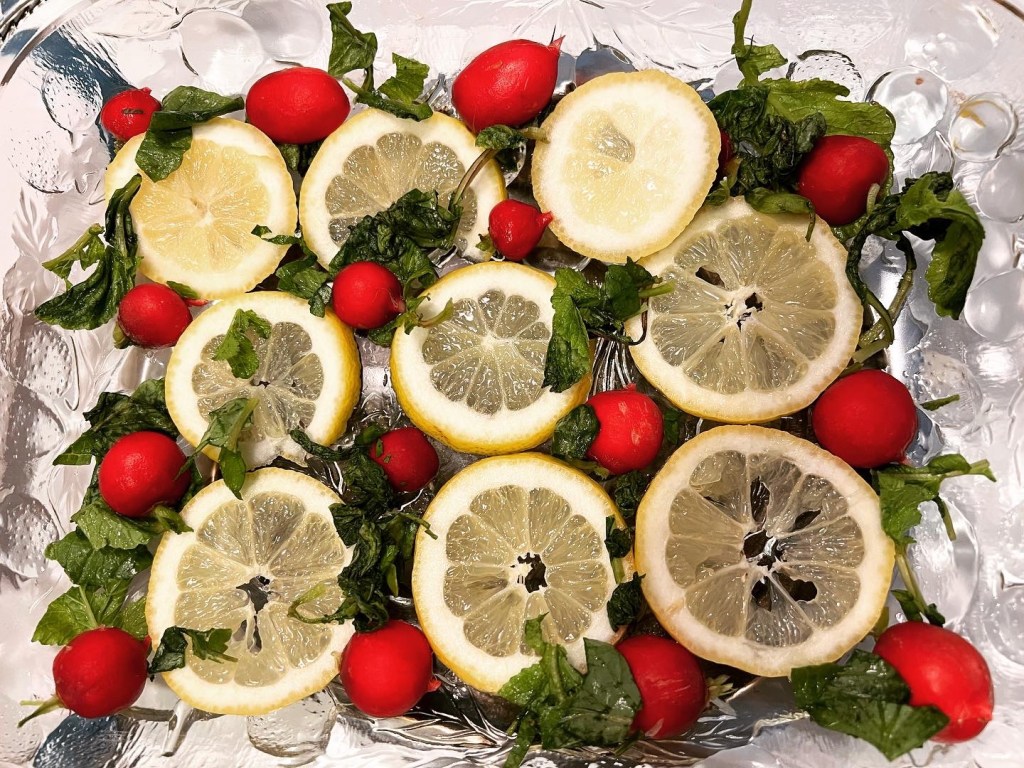
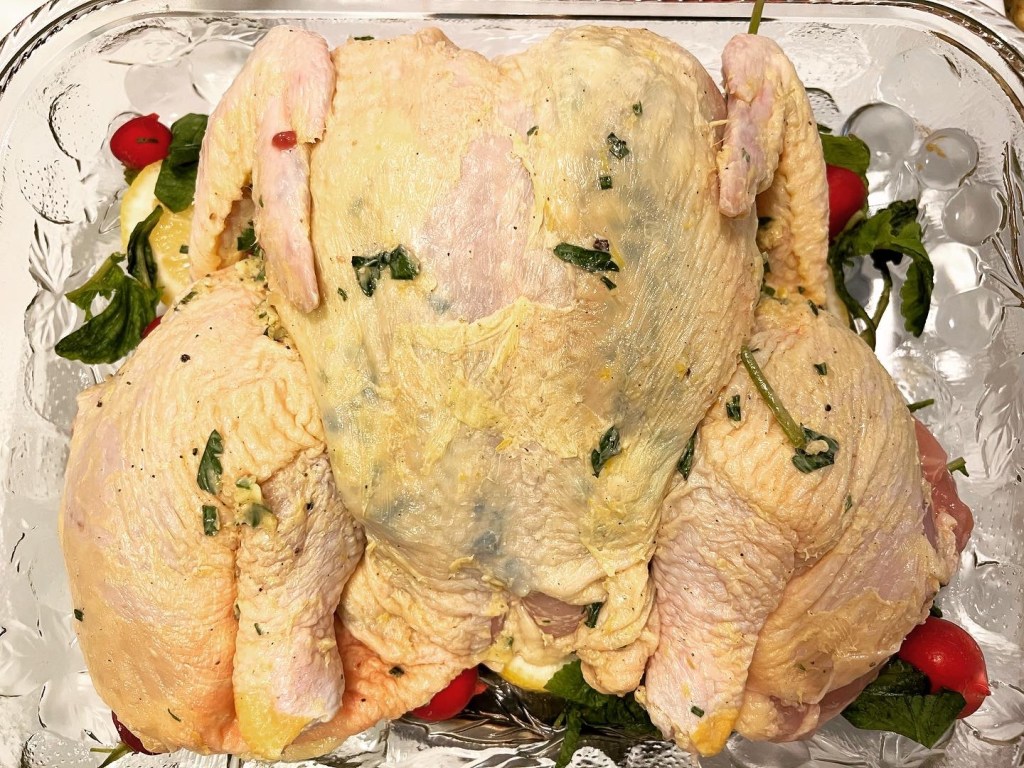
4) Layer the bottom of a glass baking dish with lemon rounds and halved radishes.
5) Pat chicken dry and place over the lemon rounds. Gently slide a couple fingers under the skin to loosen the area towards the bottom of the breast. Evenly smear half the compound butter beneath the skin against the breast meat. Smear the other half over the legs and wings. Smear some on the skin of the breast if you have some left over.
6) Roast for 45 min on the middle rack of your oven until a meat thermometer registers 155°F in the thickest part of the breast. Allow the chicken to rest in the baking dish for 15 minutes before cutting to allow the juices to redistribute in the meat.

It’s very important that you dry the chicken thoroughly prior to seasoning your chicken. This will ensure your skin gets that lovely, salty-crispy skin everyone enjoys so much. That being said… Keep the skin on. I like to eat healthy like the next person, but one of the most satisfying things about a roasted chicken is that well-seasoned skin. There are plenty of times to eat skinless chicken. Whole roasted chicken is not one of those times.
If you don’t have or care for radishes, feel free to substitute with cilantro for the greens and jicama for the radishes for a more south-of-the-border flair. Beet greens and beets would add an earthy, spring flavor. Parsley and escarole or radicchio for an Italian version. The substitution of mint, ginger, and baby bok choy all with a splash of soy sauce if you’re feeling an Asian persuasion… This dish really is the ideal blank slate for any culinary influence.
You absolutely can use the schmear to season skinless chicken, though. It’s that versatile. Another thing… Don’t use margarine. If you plan to skin the chicken and use margarine, know that you may just as well use coconut or avocado oil since margarine is just a blend of oils itself. You won’t get the same flavor and texture as you would with the butter, but the end result will still be perfectly succulent and you will have accomplished the task of making it healthier. Isn’t that why people use margarine to begin with? If there are other reasons, please don’t hesitate to tell me in the comments below. I am admittedly ignorant in this area. (Never stop learning.)
Margarine found a huge place at dinner tables across the world during WW2 fat rationing and it never really left. I’d be lying if I said I didn’t grow up on the classic Country Crock. It’s not egregious, truly. But it’s not butter. These days, I bulk buy my Kerrygold butter and I don’t apologize for it. Butter is definitely better. If you’re interested in reading more about the pros and cons of both, The Pioneer Woman has a great article here. I personally believe butter reigns supreme in this instance.
Margarine was surprisingly invented in France in the late 1800s by Hippolyte Mège-Mouriès. Emperor Napolean III tasked the chemist with discovering a substitute for butter during a time when oils and fats were a little scarce among the troops. Once can’t run a successful campaign to take over the world with an under-nourished army, now can one? If you go to the butter aisle at any grocery store, you will doubtless find yourself staring at an endless offering of butter and butter substitutes. Many of these substitutes will be called “vegetable spread” because in order to bear the “margarine” name, “Margarine or oleomargarine is the food in plastic form or liquid emulsion, containing not less than 80 percent fat…” Surprise to me, even margarine has standards.
The chicken came out golden brown with a crackling, buttery “crust.” Since the chicken was “spatchcocked,” this chicken roasts much quicker than your average roast chicken recipe. “To spatchcock a chicken, or butterfly it, is to remove the backbone, thus allowing it to be completely opened out and flattened. Doing this reduces the cooking time significantly and allows the whole bird to be cooked in different, speedier ways, such as grilling or pan frying.” It is also my opinion that this helps break down the chicken more efficiently after roasting for individual portions.
Because of all the butter and fresh herbs used in this recipe, the meat came out tender, savory, and juicy. Even the chicken breasts, a notoriously “dry” portion, came out luxuriously supple. We served ours with only the roasted radishes and some bright, peppery arugula (since we’ve been minimizing our carb intake and piling more vegetable on our plates). A heaping serving of steamy white rice would however be a welcome addition.
If you’re thinking a roasted dish during in the middle of this summer heat is too much, it truly wasn’t. The lemon and fresh herbs really livened up what could have been a heavy dish. The tartness of the lemon and the sweetness of the radishes balanced nicely with the saltiness of the jus and the pepperiness of the arugula. Alternately, this chicken was equally delicious chopped up the next day for cold leftovers in my brown-bag lunch.
Question: What swaps would you make for this dish? What sides would you serve?
Currently Reading: Little Dorrit by Charles Dickens
Scripture of the Day: “He will cover you with His pinions, and under His wings you may seek refuge; His faithfulness is a shield and bulwark.” -Psalm 91:4
 Tiffani's Table